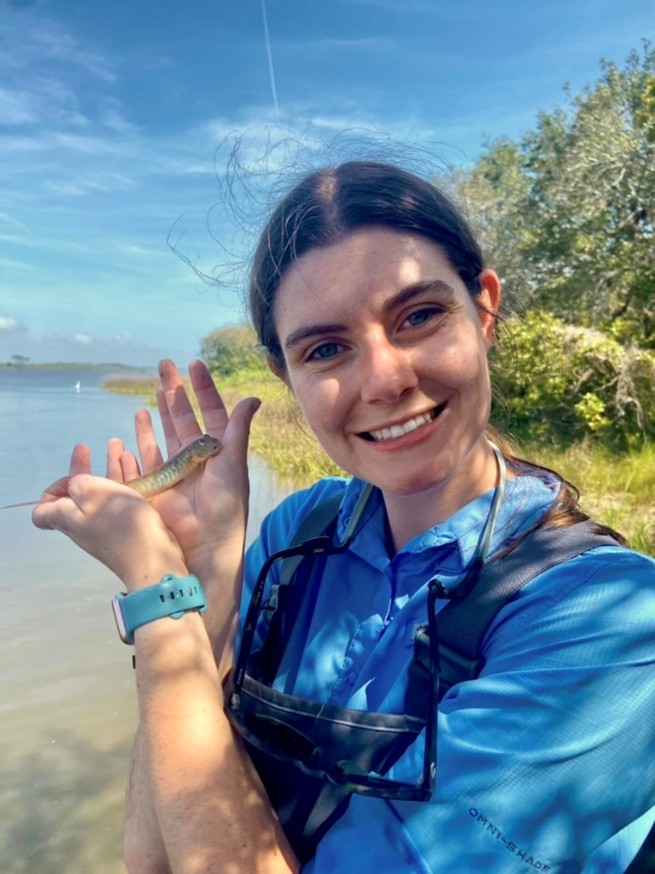
Hi everyone, my name is Meredith Pratt, and I am a Ph.D. candidate at the University of Central Florida (UCF) and the NOAA Margaret A. Davidson Fellow at the Guana Tolomato Matanzas National Estuarine Research Reserve (GTMNERR). I’ve also recently been awarded the Forage Fish Research Program Fellowship and the Florida Sea Grant/Guy Harvey Fellowship. I work in the Marine Ecology and Conservation Lab at UCF and research fish communities to further understand what species use Florida’s intracoastal waterways and how this has changed over time.
My research takes place in the GTMNERR which is unique because it is a saltmarsh-mangrove ecotone meaning that both these types of habitats occur in the reserve. Due to warming temperatures, there has been an increase of tropical mangroves species (black, red, and white) in northeast Florida. It is unknown how changing from a saltmarsh dominated habitat to one with more mangroves may impact the ecosystem—including the fish that live there! My goal is to understand if the fish community has also changed over time since the habitat has.
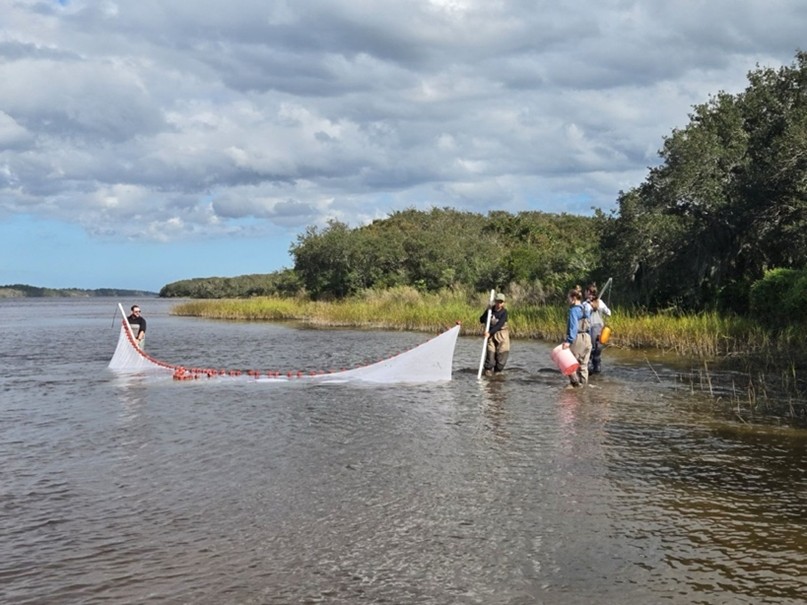
The way that we are doing this is by doing a whole lot of fishing— which is definitely the most enjoyable part of the job (keep reading to see how you can come fishing too)! The data is collected by using seine nets, which are pulled through the water by two people parallel to the shoreline. After each pull, we look at what we caught, identify the species, and record the weight and length of each fish. These measurements can tell us a lot, including when certain fish may be reproducing and whether we are catching juveniles or adults.
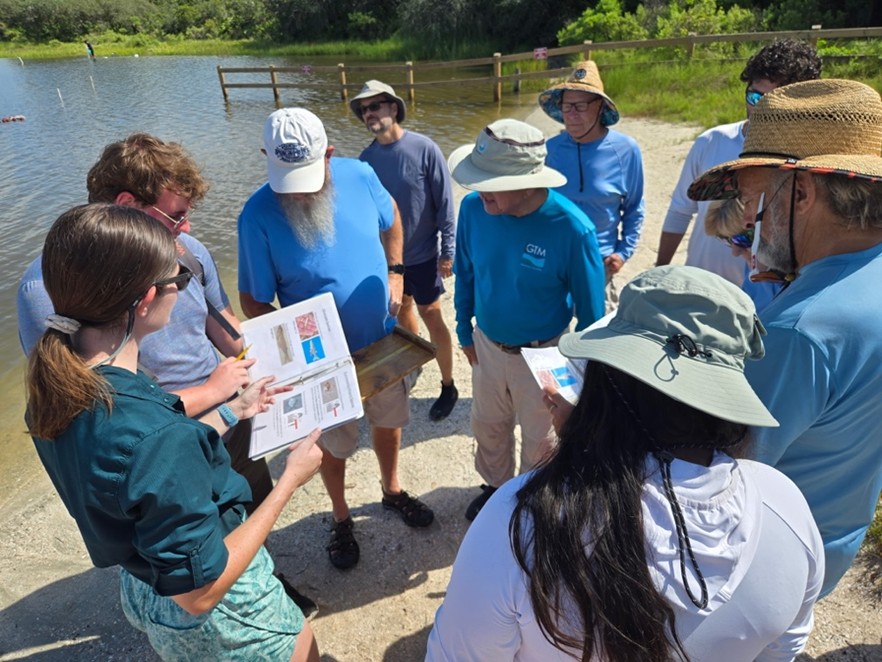
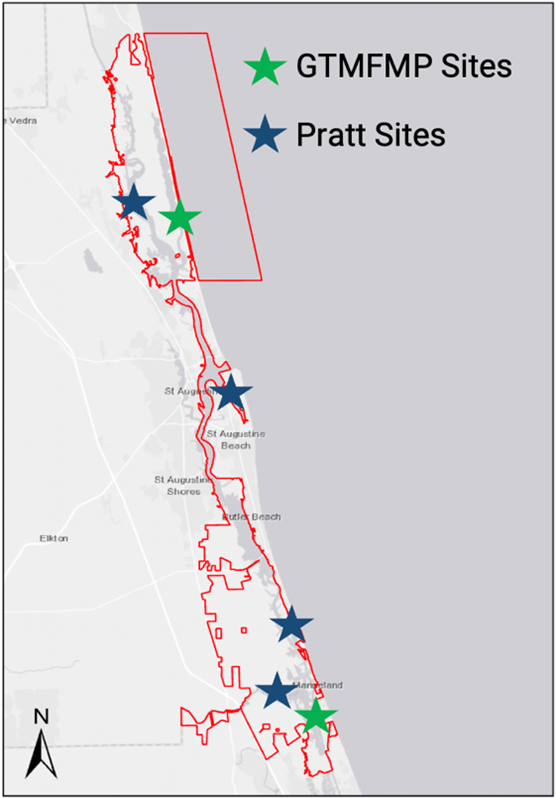
We have been sampling monthly in the GTMNERR since September 2024 at six different sites spread across the reserve. The NOAA Margaret A. Davidson fellowship has allowed me to work with reserve staff to do this research and start up a volunteer-led fisheries monitoring group named the Guana Tolomato Matanzas Fisheries Monitoring Program (GTMFMP). The program launched in summer 2025 with interested volunteers participating in classroom sessions to learn why we are doing the research and how to help collect this data. With time, the volunteers’ responsibilities are to take lead on the entire operation—from pulling the gear and collecting data with the seine nets, to identifying, recording measurements and inputting data in our online database. The volunteer-led efforts are sampling two out of the six established sample sites with the goal of having them sample more in the future. This program is important because it helps grow the reserve’s ability to collect long-term fish data and ensures that this work can continue well into the future (even after the fellowship has ended and I have my Ph.D.).
The data collected through this fellowship is crucial for the reserve and northeast Florida as we are seeing habitat and environmental changes. It can be used to understand the fish that live in the reserve so that we can better protect those species which will ensure that the reserve’s important recreational fishery can be maintained for generations to come. It’s a win-win for everyone, for the fish and for the people who love to catch them!
Learn more about the NOAA Margaret A. Davidson Fellowship at https://coast.noaa.gov/nerrs/research/davidson-fellowship.html.
Learn how to volunteer with GTMNERR programs at www.gtmnerr.org/volunteer.
 NERRds on the Water